Frequently Asked Questions
Q: What type of duct is required for dryers? A: ALL dryer exhaust ducts MUST be rigid or semi-rigid METAL. Flexible plastic or foil duct is ILLEGAL and a major fire hazard. Acceptable materials include rigid aluminum duct (most common, lightweight, corrosion-resistant, smooth interior), rigid galvanized steel duct (stronger, better for long runs), and semi-rigid aluminum (only for short transitions, not entire runs). 4-inch diameter is standard for all residential dryers.
Q: How long can my dryer duct be? A: Most codes limit dryer duct to 25-35 feet total equivalent length. Calculate equivalent length: straight duct = 1 foot per foot, each 90-degree elbow = 5 feet equivalent, each 45-degree elbow = 2.5 feet equivalent. Example: 15 feet straight + two 90-degree elbows = 25 feet equivalent. Shorter runs are more efficient. Long runs cause reduced airflow, longer drying times, more lint buildup, and potential overheating. Solutions: minimize elbows, use smooth rigid duct, consider relocating dryer, or install inline booster fan.
Q: Should I vent my dryer through the roof or wall? A: Wall venting is strongly preferred. Advantages: shortest duct run, gravity assists lint removal, easier maintenance, lower cost, less condensation. Roof venting only when wall venting is physically impossible. Disadvantages of roof venting: longer run, lint tends to settle, more condensation risk, more expensive, difficult to clean, potential for roof leaks. We always recommend wall venting when possible.
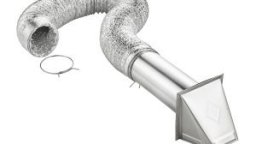
Q: Can I use flexible duct for my dryer? A: Flexible plastic or foil duct is NEVER acceptable for dryer venting - it is illegal, a fire hazard, and collects lint in ribbed interior. Semi-rigid aluminum duct is acceptable ONLY for short transitions (maximum 8 feet) from dryer to rigid duct. All main duct runs must be rigid metal. We only install code-compliant rigid or semi-rigid metal duct.
Q: Why is my dryer taking so long to dry clothes? A: Most common causes: clogged/restricted duct (lint buildup, long runs, multiple elbows), crushed or kinked duct behind dryer, too many elbows reducing airflow, duct exceeding maximum length, clogged lint screen, stuck or clogged exterior vent cap, or dryer mechanical issues. We inspect entire duct system, replace improper ductwork, clean clogged ducts, and shorten runs when possible.
Q: How often should I have my dryer duct cleaned? A: Average household (4-6 loads/week): every 1-2 years. Large household (8+ loads/week): annually. Light use: every 2-3 years. Clean more frequently with long duct runs, multiple elbows, second-floor location, heavy fabric softener use, or pet ownership. Signs duct needs cleaning: longer drying times, very hot dryer, burning smell, lint around exterior vent cap, dryer shutting off early.
Q: Can you install dryer vent for second-floor laundry room? A: Yes, second-floor dryer duct installation is a common service. We typically route duct down through floor to exterior wall, or horizontally through wall cavities. Challenges include longer runs, more elbows, potential condensation, and possible fire damper requirements. Cost: $375-$550 depending on routing complexity.
Q: What is a periscope vent box and do I need one? A: A periscope vent box is a flat aluminum box allowing dryer to sit only 2-3 inches from wall (vs. 8+ inches with standard round duct elbow). Needed for tight spaces like closets, small laundry rooms, or stacked units. Installation adds $85-$145 to duct cost.
Q: Is there a difference between gas and electric dryer venting? A: Duct requirements are the same (4-inch rigid metal), but gas dryers require more stringent code compliance since exhaust contains combustion byproducts including carbon monoxide. Gas dryers must NEVER use recirculating or indoor venting kits. We install carbon monoxide detectors are recommended in homes with gas dryers. We understand and follow all code differences.
Q: How much does dryer duct installation cost? A: Standard short run (under 15 feet): $195-$325. Long run (15-25 feet): $295-$475. Second-floor routing: $375-$550. Flexible duct replacement: $175-$295. Additional costs: roof vent add $125-$195, periscope box add $85-$145, booster fan add $275-$425. Final cost depends on duct length, number of elbows, routing difficulty, and exterior material.